
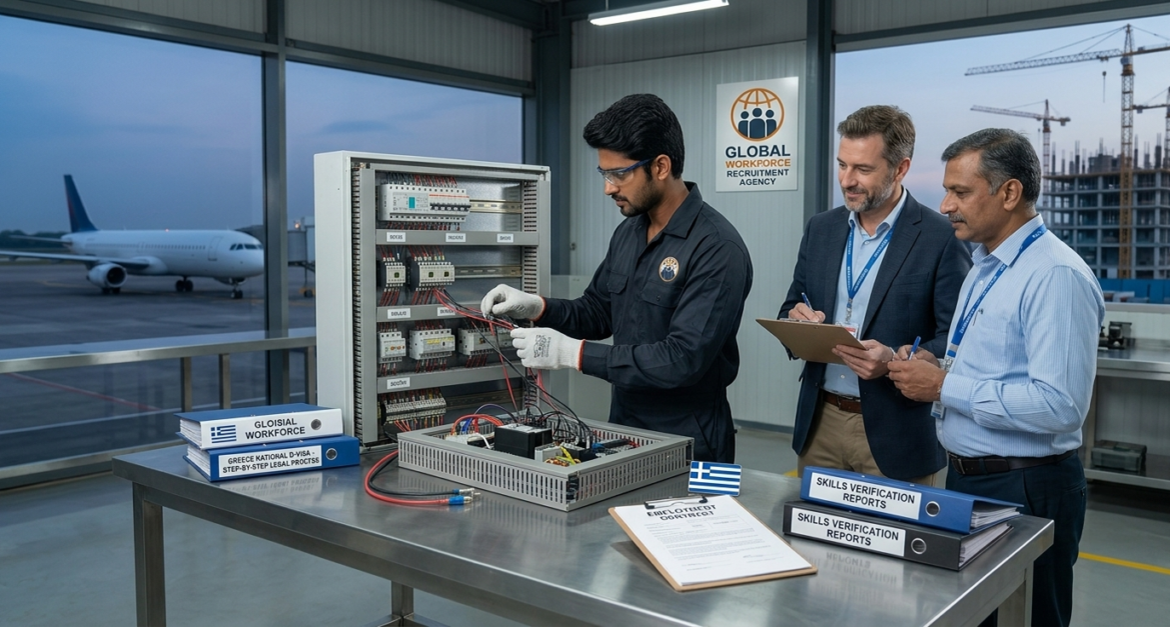
The European labor market is experiencing unprecedented structural shortages across vital sectors, including construction, hospitality, agriculture, industrial production, and logistics. As domestic labor pools shrink across Greece and the wider European Union, business leaders and HR executives are turning toward international staffing strategies to maintain operational continuity. Among foreign talent pools, India has emerged as the premier source for reliable, highly skilled, and adaptable professionals. However, navigating international labor laws, visa clearances, and bilateral agreements requires a structured framework. This comprehensive guide outlines how European businesses can hire workers from India legally, safely, and efficiently in 2026.
Partnering with a Licensed Manpower Agency in India for Seamless Recruitment
Navigating the complexities of international staffing independently can lead to administrative delays, compliance risks, and high turnover due to skill mismatches. Partnering with an established manpower agency in India simplifies the entire recruitment lifecycle. A licensed manpower consultancy in India acts as your on-the-ground operational partner—handling everything from talent sourcing and practical trade testing to local legal verification and Indian emigration clearances.
By leveraging an experienced manpower recruitment agency in India, European employers reduce recruitment lead times, ensure strict adherence to both Indian and European labor regulations, and gain direct access to pre-vetted candidate pools tailored to specific industry demands.
THE INTERNATIONAL HIRING ROADMAP –
- STAGE 1: Demand Approval & Quota Authorization (Local EU Ministry Clearance)
- STAGE 2: Sourcing & Trade Testing via a Manpower Consultancy in India
- STAGE 3: Employment Contracts & National D-Visa Processing
- STAGE 4: Deployment, Flight Coordination & Local EU Integration
Step 1: Legal Authorization & Employer Demand Approval in Europe
Before initiating candidate selection overseas, European employers must ensure full compliance with their domestic immigration regulations and EU labor quotas.
- Filing the Employer Demand: European companies must submit an official application to their local labor ministry or regional authority (such as the Decentralized Administration in Greece) detailing the specific job roles, required headcounts, minimum wage scales, and working conditions.
- Securing Legal Quotas: Authorities evaluate local labor market shortages to issue formal approval for recruiting third-country nationals (TCNs).
- Power of Attorney (PoA) & Agency Mandate: Once approved, the European employer executes a legal Power of Attorney and Demand Letter in favor of their chosen manpower agency in India. This authorizes the agency to publish advertisements, screen candidates, and represent the employer before embassy authorities.
Step 2: Sourcing, Rigorous Screening, and Practical Trade Testing
Quality assurance is paramount when importing workers from India to ensure operational efficiency from day one.
CANDIDATE EVALUATION WORKFLOW
- Profile Screening – CV & Credentials, Language assessment
- Practical Trade Test – Hands-on skill validation, Recorded video documentation
- Medical Clearance – Fit-to-work fitness, Biometric verification
- Targeted Recruitment Campaigns: The agency leverages extensive databases and regional hubs across India to recruit candidates fitting exact job specifications—whether coded welders, commercial chefs, heavy machinery operators, or agricultural technicians.
- Hands-On Trade Testing: Candidates undergo practical skill evaluations at certified trade testing centers. For instance, welders undergo X-ray welding tests, electricians complete industrial wiring simulations, and hospitality staff perform practical culinary tests.
- Transparent Employer Verification: Employers receive comprehensive video recordings of candidate practical assessments or can conduct live technical interviews via video conference before issuing final selection letters.
Step 3: Employment Contracts, Medical Fitness, and Embassy D-Visa Processing
Once candidate selections are finalized, the legal immigration workflow begins.
The third stage of the international hiring process centers around formalizing contracts and processing legal travel documentation. It begins with the execution of a bilateral employment agreement signed directly by both the employer and the candidate. Following contract signing, the candidate undergoes a mandatory medical screening at a GAMCA or certified medical clinic to obtain official health clearance. Finally, the recruitment agency manages the embassy submission process, coordinating with VFS and the relevant European Embassy to secure National D-Visa clearance for the deployed worker.
- Standardized Bilateral Contracts: Employment contracts must be drafted in both English and the official language of the destination European country. Contracts must explicitly state remuneration, working hours, social security coverage, overtime rates, and accommodation provisions in accordance with local collective bargaining agreements.
- Medical Fitness & Background Checks: Candidates complete mandatory medical examinations at certified clinics to confirm physical fitness for overseas deployment, alongside police clearance certificates (PCC) issued by Indian authorities.
- National D-Visa Application: The agency compiles the complete consular file—including approved employer permits, legal contracts, medicals, and police clearances—for submission to the relevant European Embassy or Consulate in New Delhi (or regional VFS application centers). The consular office reviews documentation and issues the National Long-Stay Visa (D-Visa).
Step 4: Travel Logistics, Arrival, and Integration in Europe
The final phase involves transitioning workers safely from India to their new work environment in Europe.
- Flight Coordination & Pre-Departure Briefing: Candidates undergo thorough pre-departure orientation covering local employment laws, cultural norms, safety standards, and workplace expectations. Travel itineraries and group flight bookings are coordinated for seamless arrival.
- Port Arrival & Airport Reception: Representatives from the European employer or local staffing partner receive the workers upon arrival at the destination airport, facilitating immediate transport to approved housing accommodations.
- Residence Permit Formalities: Within the stipulated period after arrival, the employer assists workers in completing local administrative registrations—such as obtaining local tax identification numbers, social security registration, and converting the entry D-Visa into a full temporary residence permit for work.
Integrating Indian Workers in Greece and the EU: Key Operational Advantages
KEY ADVANTAGES OF INDIAN TALENT
- Technical Competence: Rigorously trained in modern industrial standards.
- English Proficiency: Strong functional communication for workplace safety.
- High Retention: Committed to long-term legal employment contracts.
- Rapid Adaptability: Proven track record across European infrastructure projects.
The presence of Indian workers in Greece and across Western Europe has grown substantially due to their reputation for technical competence, strong work ethic, and adaptability.
For European industries facing tight project deadlines and operational bottlenecks, establishing a legal, structured talent pipeline from India delivers long-term stability and a distinct competitive advantage.
Strategic Checklist for European HR Leaders in 2026
- [ ] Obtain local ministry approval and labor quota clearances for third-country national hiring.
- [ ] Partner with a fully licensed, vetted manpower recruitment agency in India.
- [ ] Define exact candidate job descriptions, technical trade testing parameters, and minimum wage scales.
- [ ] Review video trade test evaluations or participate in live video interviews for final selections.
- [ ] Ensure all employment contracts comply with local European labor standards and bilateral frameworks.
- [ ] Prepare suitable housing accommodations and local integration support before candidate arrival.
By following this step-by-step recruitment model, European business owners can eliminate labor shortages, safeguard legal compliance, and build a highly capable workforce capable of driving sustained growth throughout 2026 and beyond.
Frequently Asked Questions (FAQs)
How long does the entire process take to hire workers from India?
The end-to-end timeline typically spans 45 to 90 days. This includes local quota authorization in Europe, candidate sourcing and trade testing in India, embassy D-Visa processing, and flight deployment.
Do workers hired from India speak English?
Yes. Candidate screening evaluates functional English proficiency, ensuring workers can follow safety instructions, read technical manuals, and communicate effectively with supervisors on-site.
What are the employer’s obligations regarding accommodation?
In accordance with European third-country national hiring regulations, employers must ensure deployed workers are provided with safe, legal, and suitable living accommodations that meet municipal health and safety standards.